Kharkhorum City Council
The body vested with the power to define the city's economic and social development policy and decide matters within the city's remit.
Introduction
Under article 13.1 of the Law on Supporting the Planning, Construction and Development of Kharkhorum City, the Kharkhorum City Council governs the city together with the City Governor. The Council was established, and its rules approved, by Government Resolution No. 118of 2026.
The Council operates on the principles of justice, the rule of law and freedom from conflicts of interest and corruption, and has its own seal, stamp and letterhead.
Powers and functions
Under the Council Rules approved by Government Resolution No. 118, the Council exercises the following powers and functions.
Powers of the Council
- Define the city's economic and social development policy;
- Exercise the city's ownership rights;
- Approve projects and programmes and oversee their implementation;
- Introduce international best practice in governance;
- Decide public–private partnership matters;
- Set members' remuneration;
- Appoint and dismiss the Secretary, who heads the Executive Office.
Functions of the Council
- Decide matters set out in article 14 of the Kharkhorum Law;
- Bring the city's legal environment to international best practice;
- Regularly oversee the Governor's activities;
- Adopt standards, rules and regulations and register them with the state;
- Approve partial master plans and the annual land-management plan on the Governor's proposal;
- Register the name "Kharkhorum" as intellectual property in Cyrillic, traditional Mongolian script and other languages (Rules, art. 3.1.7);
- Establish city-owned legal entities;
- Approve the city budget and its performance report;
- Approve the composition and rules of the Investors' Council (Rules, art. 3.1.11).
Powers of the Chair
The Chair's term of office is 4 years. The Chair convenes and presides over sessions, formalises decisions, nominates the Secretary and concludes their employment contract, issues directives on Executive Office matters, and represents the Council without power of attorney.
Members' rights, duties and termination of mandate
A member's term is 4 years. Members may ask questions, voice opinions, call votes and table matters, and must recuse themselves from conflicts of interest.
Grounds for termination: death; own request; inability to perform duties; a criminal conviction; misconduct; repeated failure to perform duties or missing more than three sessions.
Council members
Under article 13.5 of the Kharkhorum Law, the Council has 11 members drawn from the following representation. Members are appointed and dismissed by the Government.
| Provision | Representation | No. |
|---|---|---|
| 13.5.1 | Representatives proposed by the Government | 3 |
| 13.5.2 | The City Governor | 1 |
| 13.5.3 | Representatives proposed by the Mongolian National Chamber of Commerce and Industry (selected through open nomination) | 3 |
| 13.5.4 | Chairs of the Citizens' Representative Khurals of the host aimags (Arkhangai, Övörkhangai) | 2 |
| 13.5.5 | Professional-association representatives proposed by the central state authority for construction and urban development | 2 |
| Total | 11 |
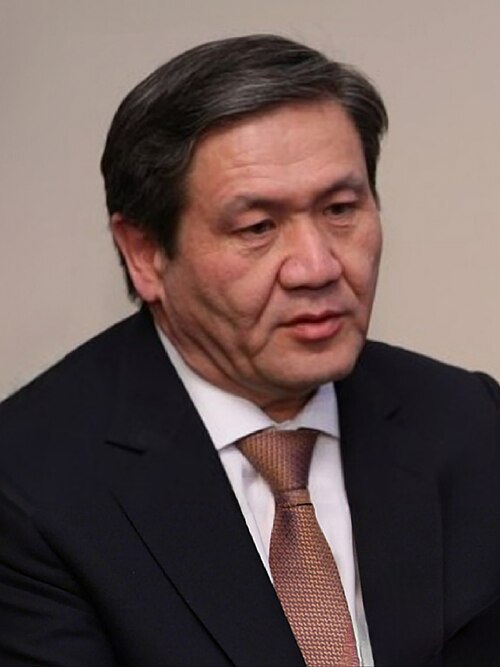
Third President of Mongolia.
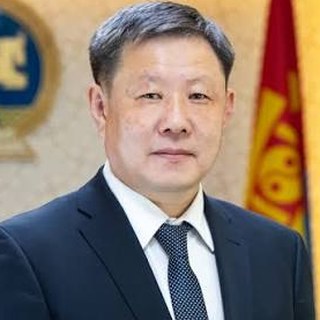
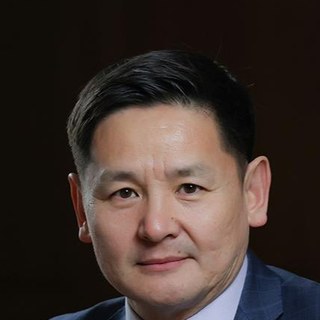

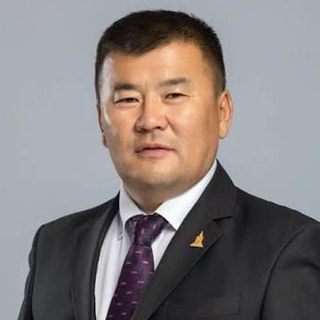
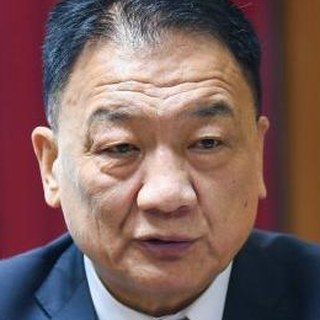
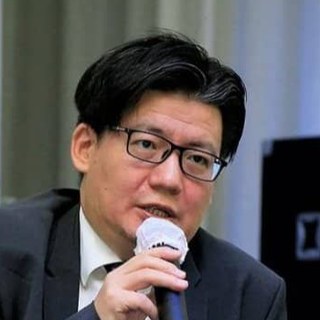
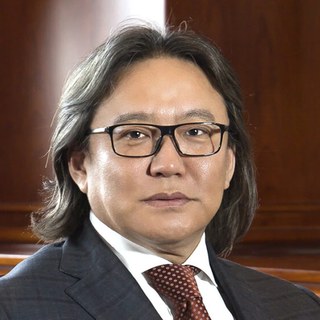
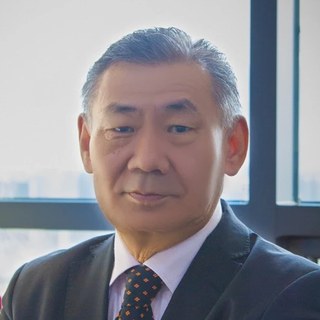
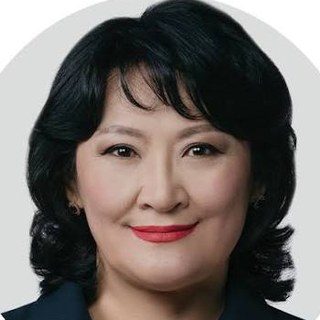
Head of the Council Executive Office.
Sessions
Rules of procedure
- The principal form of work is the session;
- Meets at least once a month;
- A quorum requires a majority of members;
- Adopts resolutions by majority vote of those present;
- Extraordinary sessions may be convened;
- Sessions may be held online;
- Committees and ad hoc working groups may be formed;
- Resolutions are signed and sealed by the Chair.
Electing the Chair
Within 10 working days of the Government appointing the Council, the first session is convened, chaired by the eldest member.
The Chair is elected by secret ballot, by majority vote. If no candidate wins a majority, an open run-off is held between the two candidates with the most votes.
Executive Office
The Council has an Executive Office for day-to-day operations. The Government set its staff limit at 10, and the Council approved its organisational structure at its session of 24 June 2026.
| № | Position | Main responsibilities |
|---|---|---|
| 1 | Secretary of the Council and Head of the Executive Office | Leads the Office, issues orders, administers the budget, oversees glass-account reporting, manages human resources |
| 2 | Senior officer for investment and innovation | Attracting domestic and foreign investment; free-zone and innovation policy |
| 3 | Senior officer for urban planning | Master and partial plans, zoning, land management |
| 4 | Senior officer for construction | Infrastructure, buildings, project delivery |
| 5 | Senior officer for public and external relations and partnerships | Media, public participation, external relations, partnerships |
| 6 | Senior officer for projects and programmes | Project development and monitoring; work with donor organisations |
| 7 | Senior officer for legal affairs, monitoring and evaluation | Legal documents, normative acts, monitoring and evaluation |
| 8 | Senior officer for information technology | Digital systems, databases, cybersecurity |
| 9 | Officer for sessions, archives and records | Session preparation, minutes, formalising decisions, archives |
| 10 | Accountant | Finance, budget performance, reporting, audit |