Great Mongol Empire
Homeland Steppe
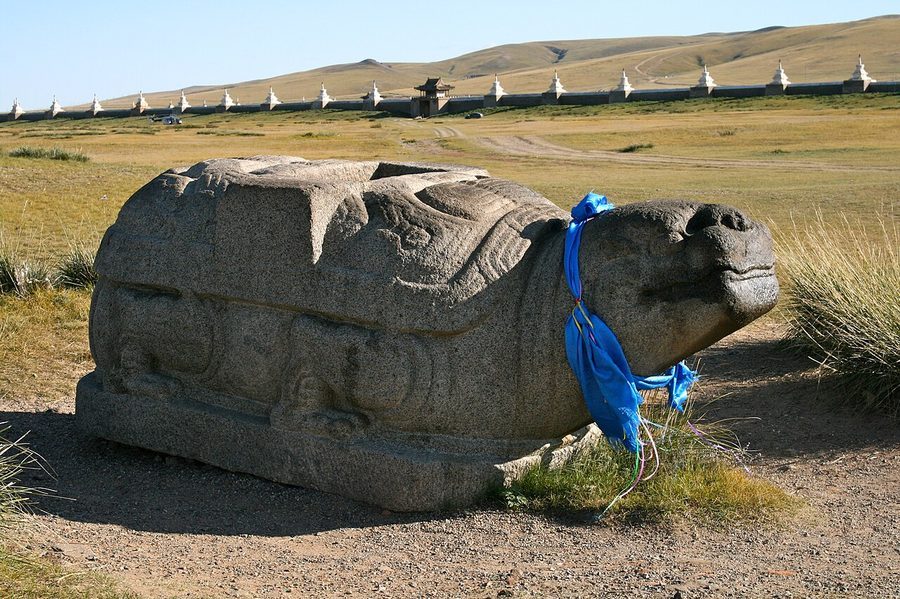
A steppe meadow sown from Orkhon seed, the five kinds of herd animals, felt, gers and airag — nomadic life, alive every day.
Photo: Kharkhorum turtle stele · Ф. Филипп, Wikimedia, CC BY 2.0The goal: rebuild historic Kharkhorum — capital of the Great Mongol State — in the Orkhon Valley as a modern, self-sustaining city of state rank.
The Orkhon Valley is the traditional seat of steppe statehood — home to the Xiongnu Luut city, the Rouran Mumo, and the Türkic and Uyghur Khar Balgas (Ordu-Baliq) capitals. Founded in 1220 by decree of Chinggis Khaan, Kharkhorum flourished under Ögedei, Güyük and Möngke as the true world capital of the Pax Mongolicaera, connecting nations and civilisations.
In 1586 the first Buddhist monastery of Mongolia, Erdene Zuu , was built on its ruins; the Orkhon Valley cultural landscape is inscribed on the UNESCO World Heritage List.
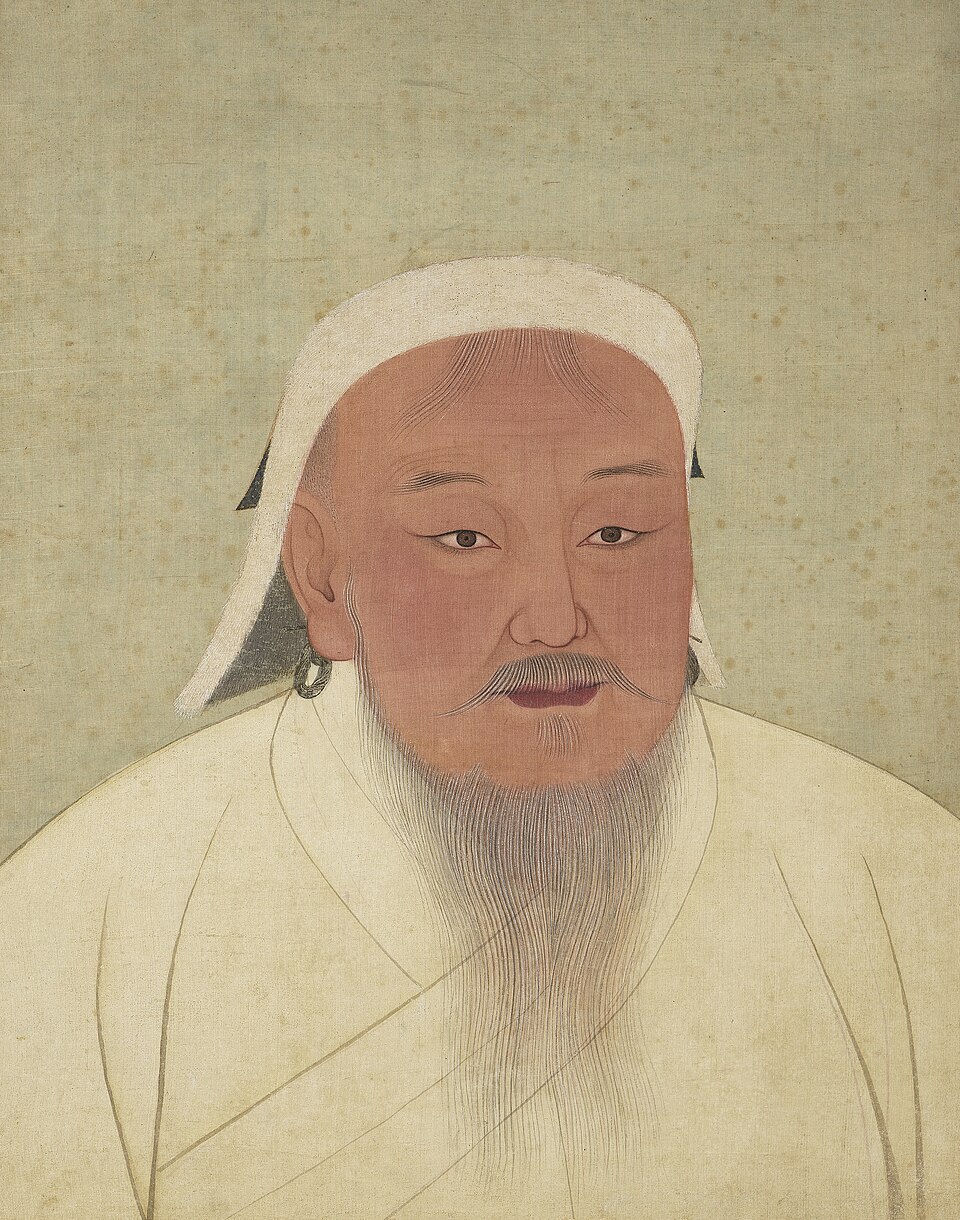
By decree of Chinggis Khaan, the foundation of a capital in the Orkhon Valley is laid.
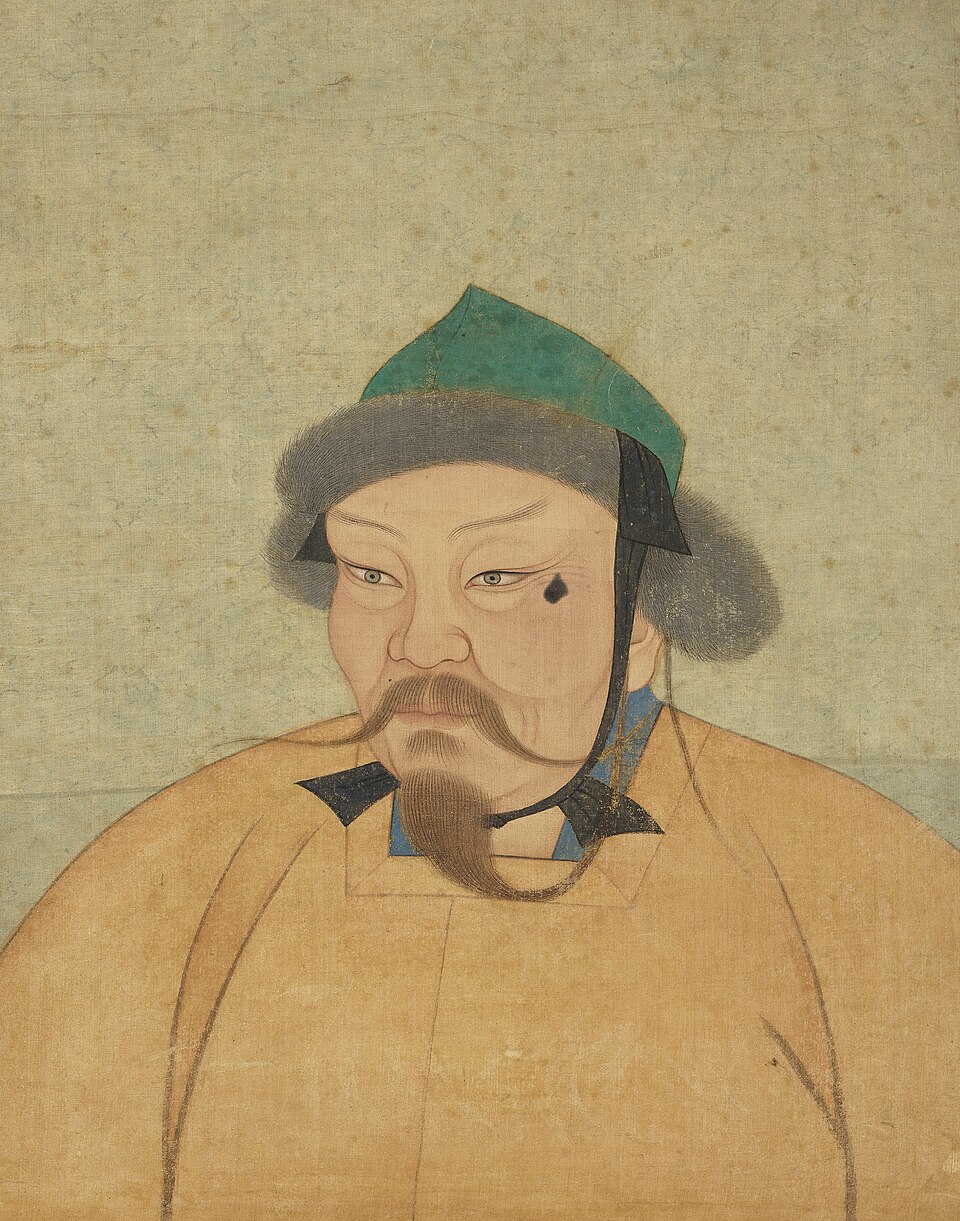
The khan's palace is built by decree of Ögedei Khaan.
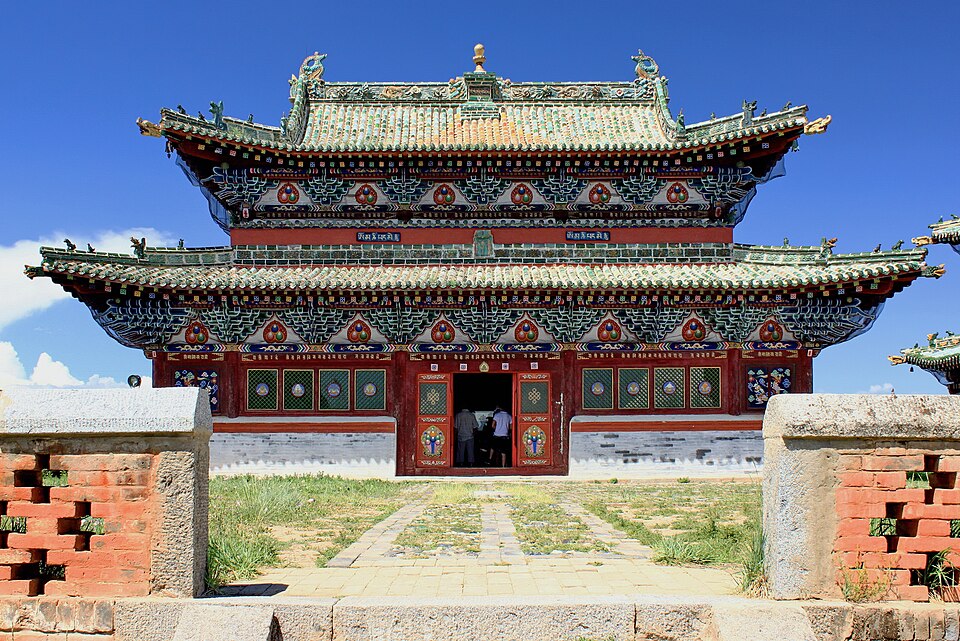
The first Buddhist monastery of Mongolia is built on the ruins of Kharkhorum.
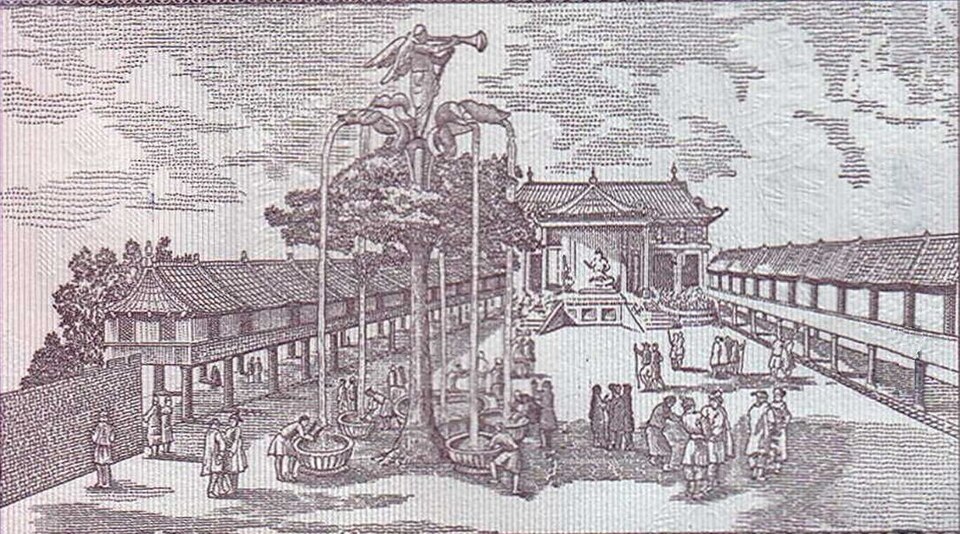
The city's symbol is the The Silver Tree expressing the history, heritage and traditions of ancient Kharkhorum (Law, art. 28.2).
Kharkhorum Skansen — a living landscape of the Mongol world, from the Kharkhorum Gate to the Seed Centre.
Set in the Orkhon Valley, the park will present the Great Mongol Empire and the states that grew from it, keeping nomadic culture, crafts and plant heritage alive through daily activity. It is neither a theme park nor a collection of replicas — the landscape is the main exhibit.
From the first pasque-flowers in May to the golden larches of October something is always in flower, and evergreens and ice carry the park through winter.
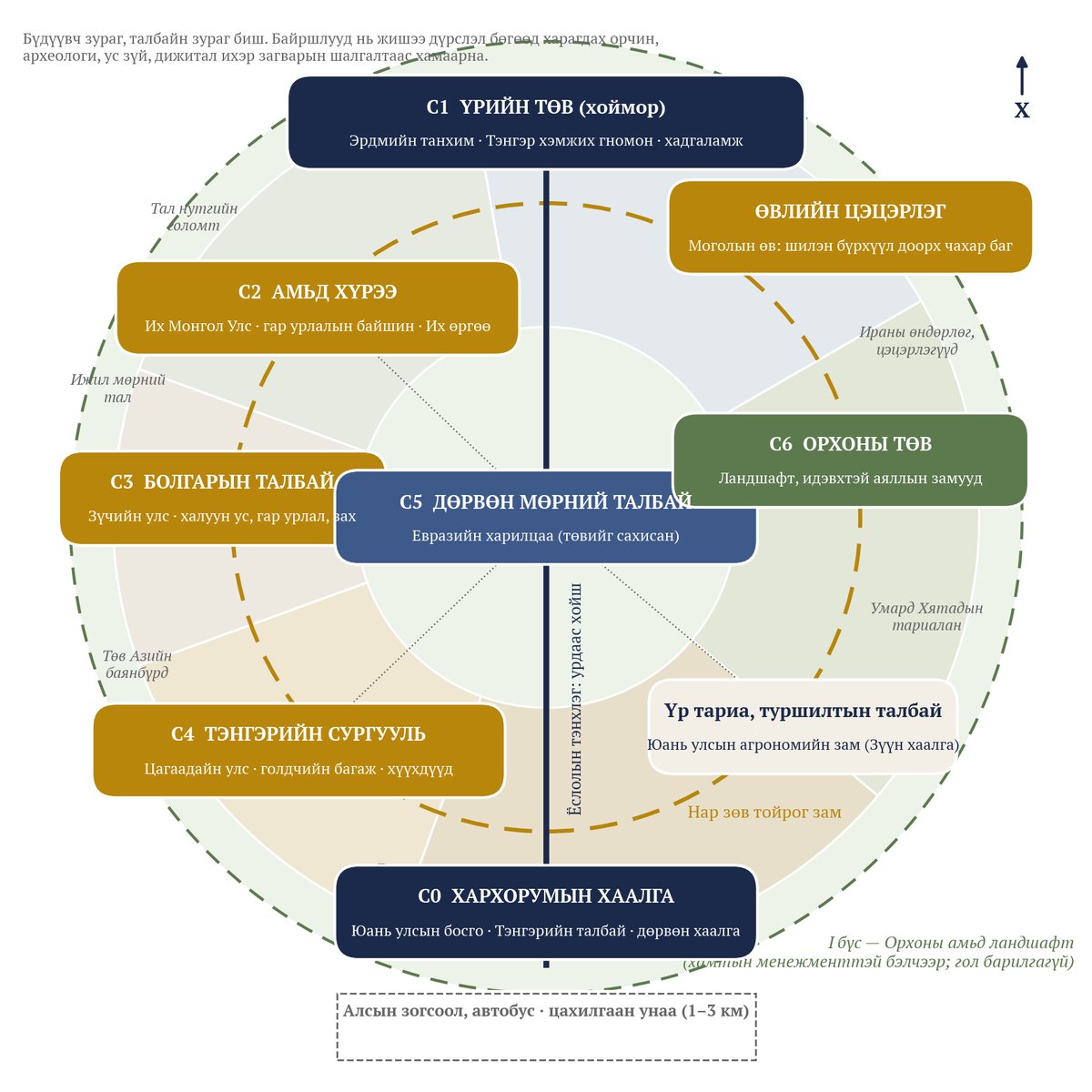
Each district has its own plants, water, animals, crafts, food and seasonal programme. Photos show the historic landmark that inspires each district.
A steppe meadow sown from Orkhon seed, the five kinds of herd animals, felt, gers and airag — nomadic life, alive every day.
Photo: Kharkhorum turtle stele · Ф. Филипп, Wikimedia, CC BY 2.0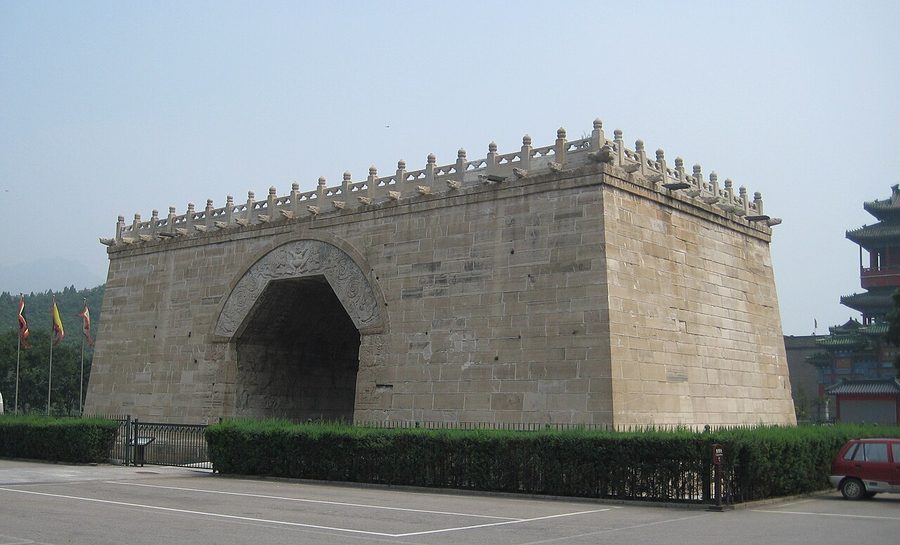
The park's gateway: a shelter-belt avenue, Kharkhorum's four grains and the Mirror of Heaven.
Photo: Cloud Platform at Juyongguan (1342–45) · BabelStone, Wikimedia, CC BY-SA 3.0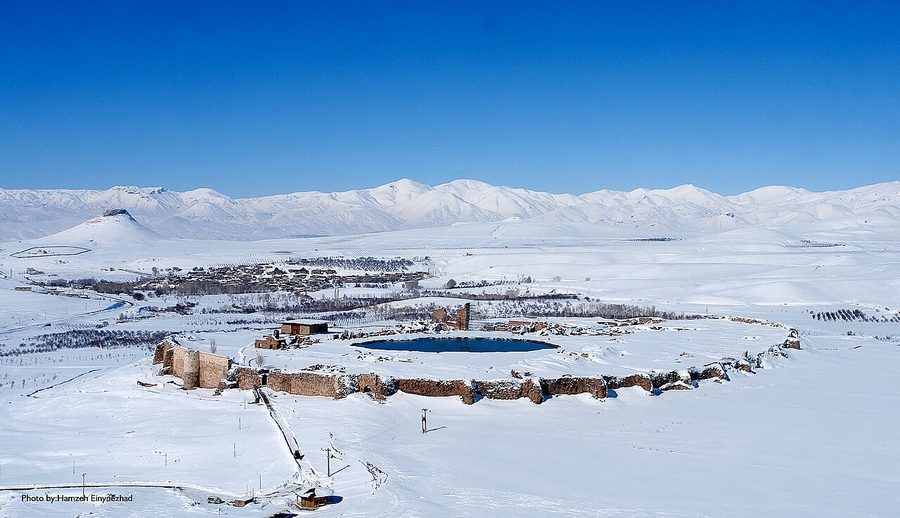
A walled, irrigated garden inspired by Maragheh and Takht-e Soleyman; paper, calligraphy and lustre tiles.
Photo: Takht-e Soleyman, Iran · Х. Эйни Нежад, Wikimedia, CC BY-SA 4.0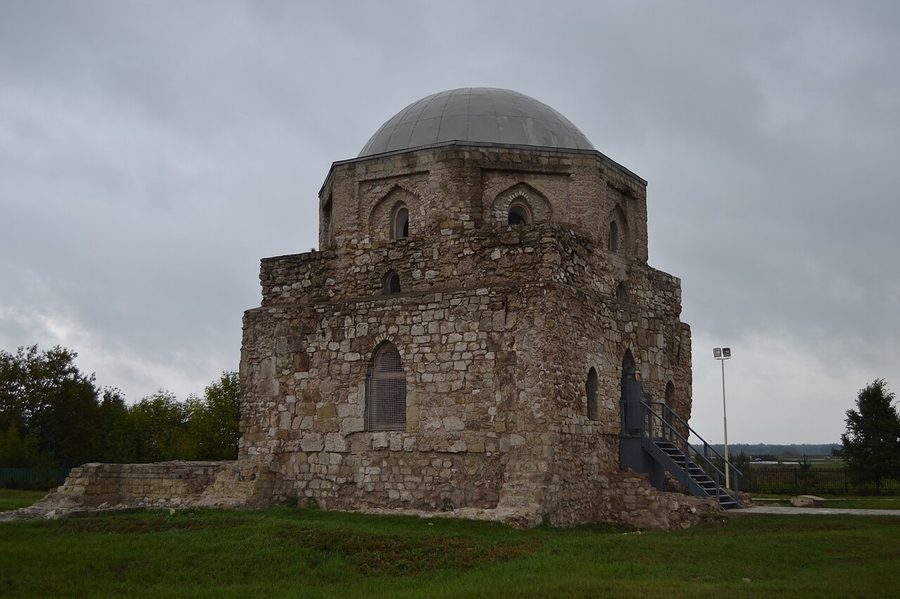
Feather-grass steppe of the Volga cities, a bathhouse and a crafts market.
Photo: Black Chamber, Bolgar (14th c.) · misterfoe, Wikimedia, CC BY-SA 3.0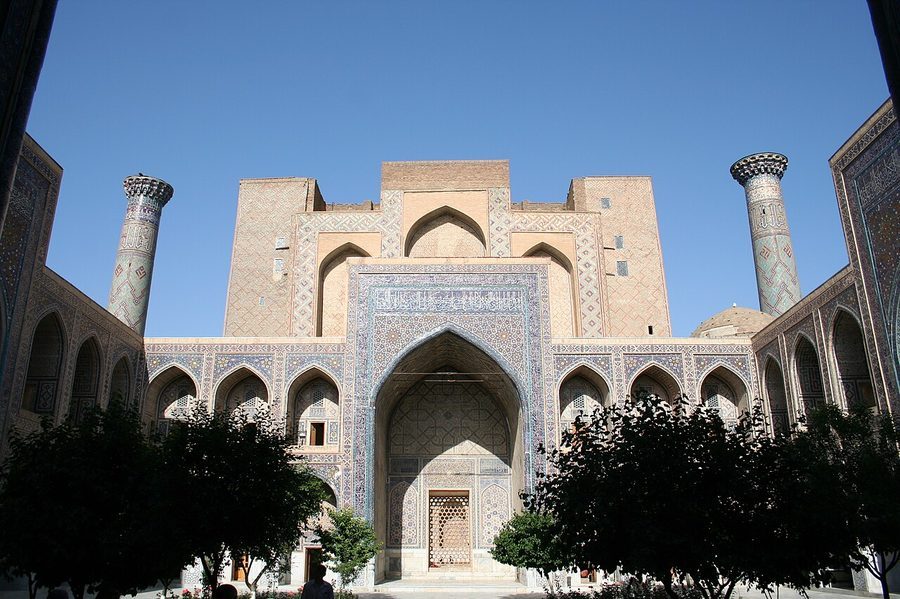
A courtyard school inspired by Ulugh Beg's madrasa and observatory, with a Central Asian garden.
Photo: Ulugh Beg Madrasa, Samarkand · Patrickringgenberg, Wikimedia, CC BY-SA 3.0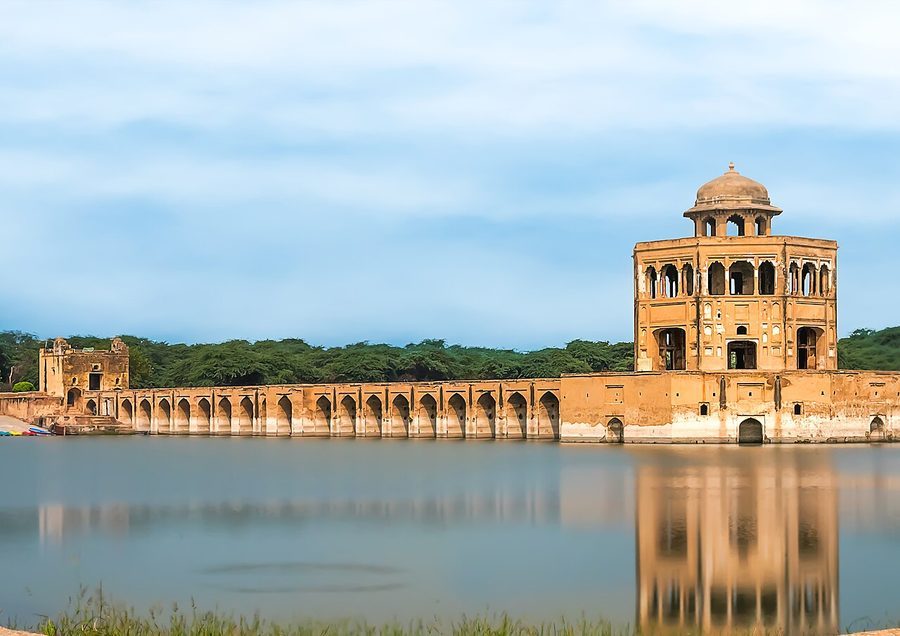
A chahar bagh under glass — pomegranate, fig and cypress, green all year even in a Kharkhorin winter.
Photo: Hiran Minar, Sheikhupura · Shaguftakarim, Wikimedia, CC BY-SA 4.0Not a monumental building but a place to feel sky and landscape. Visitors enter from the south through a Yuan-era threshold, as a guest enters a ger, get their bearings in 20–30 minutes and fan out through four gates.
Not the park's nursery but a national institution serving all of Mongolia: a science centre for plant genetic resources and ecosystem restoration. The journey ends here, in the future.
Concept presentation, September 2026. Final decisions rest with the Kharkhorum City Council.
By Government Resolution No. 116 of 8 April 2026, the revised concept of the master plan for Kharkhorum City was approved in principle, and the preparation of the city’s master plan in accordance therewith was authorised. Full text of the concept (legalinfo.mn, in Mongolian)
In recent years, owing to disparities in the development of regions, cities and rural areas, the migration of citizens towards the capital city of Ulaanbaatar has intensified markedly: the capital, which occupies 0.3 per cent of the total territory of Mongolia, is home to 50 per cent of the population and concentrates 70 per cent of registered business entities, 84 per cent of trade and services, and 96 per cent of universities and institutions of higher education. The resulting problems, such as the excessive concentration of the population, traffic congestion and environmental pollution, continue to grow and intensify year by year.
Accordingly, in keeping with the Constitution, and in line with the need to create favourable conditions for citizens to live in a healthy and safe environment, to increase the accessibility of social infrastructure, to ease the excessive concentration of the population, to ensure balanced regional development and to distribute social wealth fairly, the establishment of new cities is a legitimate and pressing matter.
In accordance with the concept of the Kharkhorum City Master Plan:
Directions to be realised by 2040 — the 820th anniversary of the city's founding:
A special-status autonomous city with a complete legal regime, capable of permanently hosting Parliament.
Heritage zones, archaeology and palaeontology, the Three Manly Games, spa resorts and virtual tourism. The ancient ruins become an enclosed open-air museum.
A technology park; bio-, nano- and robotics; national and international data centres; artificial intelligence; an integrated smart-city control centre; a start-up ecosystem; digital construction.
International organisations and diplomatic missions; a free zone with banking, finance and preferential tax treatment; a UN presence; international banks and a stock exchange; foreign universities; and, based at the Academy of Sciences, the Kharkhorum University (aiming for the world top 30); protection of the Orkhon river; restoration of Kheltgiin Tsagaan lake; at least 50% green space in residential zones; the Great Khaans Park.
An Ulaanbaatar–Kharkhorum high-speed railway; a 4E-class airport; a dry port; a 6-lane Ulaanbaatar–Lün and 4-lane Lün–Kharkhorum highway; a 500 kV transmission line. Projected impact: 24,300 jobs and 56,386 residents.
Organic food, farm enterprises, the "White Gold" programme, an agro-park and a seed bank.
Innovation-driven manufacturing of high value-added export products.
Under article 9 of the Kharkhorum Law, in addition to the zones set by the Urban Development Law, the city's territory has the following zones, each with its own approved zoning rules.
| Provision | Requirement |
|---|---|
| 8.1.1 | Residents can reach schools, kindergartens, healthcare, public transport and services within 300–800 m of home |
| 8.1.2 | At least 50% of residential zones is green space |
| 8.1.5 | Population density planned at no more than 460 persons/ha |
| 8.1.9 | Public buildings rely on grey-water reuse and waste-sorting technology |
| 8.1.10 | Utility networks run through underground tunnel systems |
| 8.1.11 | Airspace provision for unmanned aerial vehicles (drones) |
| 8.1.13 | An accessible environment for persons with disabilities |
| 8.3 | The master plan spans 20 years, partial master plans 5 years |
Under article 7 of the Kharkhorum Law, the city has the following planning documents:
| Document | Approving authority |
|---|---|
| Master plan concept | Presented to the Government for approval |
| City master plan | The Government |
| Partial master plans | The Council (on the Governor's proposal) |
| Project feasibility studies | The City Governor |
| Construction projects | The City Governor |
| Annual land-management plan | The Council (on the Governor's proposal) |